

How to Read a Two Card Lenormand Spread
If you already pull a Tarot card each day, you know the pleasure of this small daily ritual: one card, and something to carry through the day. If you would like to explore something a bit different, try using Lenormand cards instead of Tarot for your daily spread. This is an excellent practice if you are interested in learning to read Lenormand.
How to Read Two Lenormand Cards as a Sentence
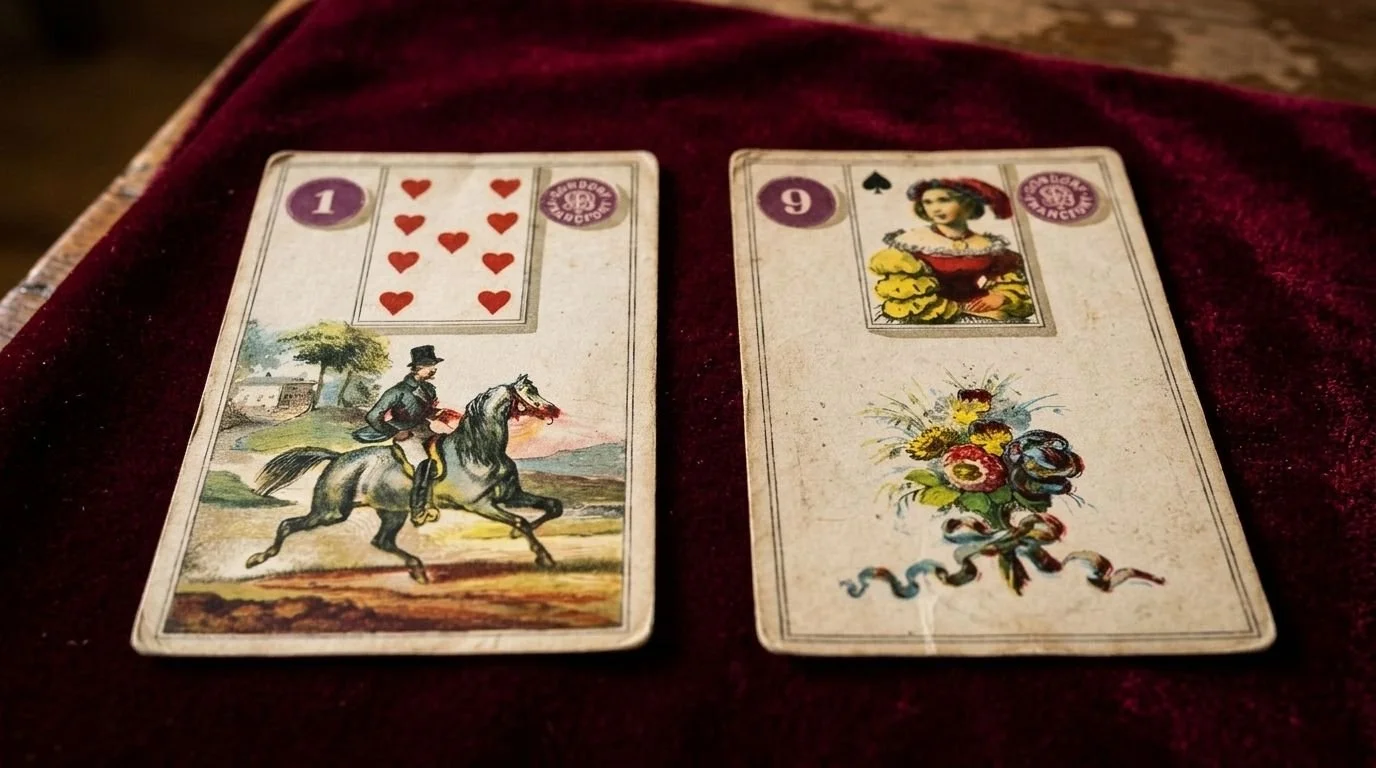
The Petit Lenormand is a 36-card deck named after the Parisian fortune-teller Marie Anne Lenormand. With this deck you don't draw one card. You always draw at least two, and you read them together, the way you would read a short phrase.
That advice comes from Mary K. Greer, author of Tarot for Your Self. Her course, The Complete Lenormand teaches this skill in its first class. There she tells students that if they are going to do daily spreads using Lenormand cards, they should not draw one card, but two at the very least, and she really recommends three. This guide explains how to read the two-card pair, which is the building block of every Lenormand reading, and turn it into a daily practice you can start tomorrow morning.
Why One Lenormand Card Is Not Enough
A Lenormand card on its own is a word without a sentence. Mary uses the House card to show why. The House can mean your home, your immediate surroundings, the people you live with, your property and sense of ownership, your security, even your physical body. Drawn alone, it can't tell you which of these the day is about. Your housemates? Your health? A house sale?
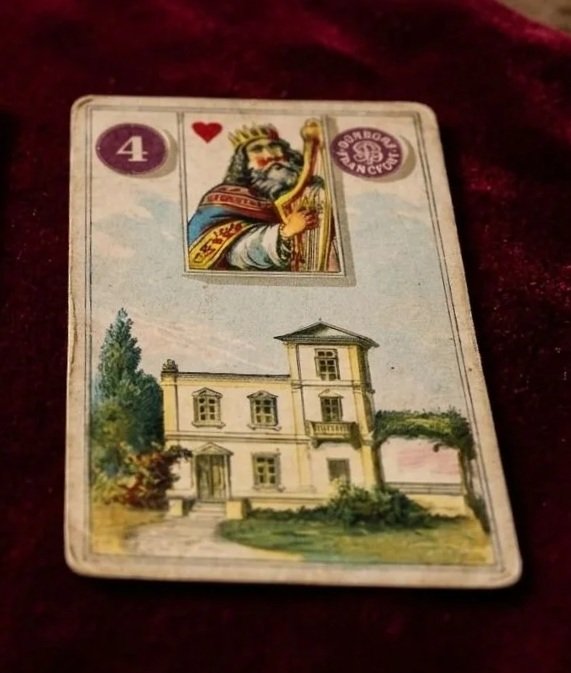
As Mary puts it in class: “The basic unit is the pair.” In her words, cards are always read in combination with other cards. A second card narrows the field, and the question you bring narrows it further.
The First Card Is the Subject
Most readers lay Lenormand pairs out from left to right; Mary puts it at about 90 percent. She teaches that the first card in the line is your subject, and the card next to it modifies that subject. It works like an adjective. She points out that this runs against English habit, where the describing word comes first. In Lenormand, the card on the right usually describes the card on the left.
So it helps to know each card in two forms: a noun for when it leads, and an adjective for when it follows. Mary's own example is the House, which as a modifier becomes domestic. With a few of each for every card, she says, you can do a lot of readings from the keywords alone.
Three Lenormand Pairs from Mary K. Greer's First Class
These are the pairs Mary works through with her students. Notice how the second card always answers the question “what kind?”
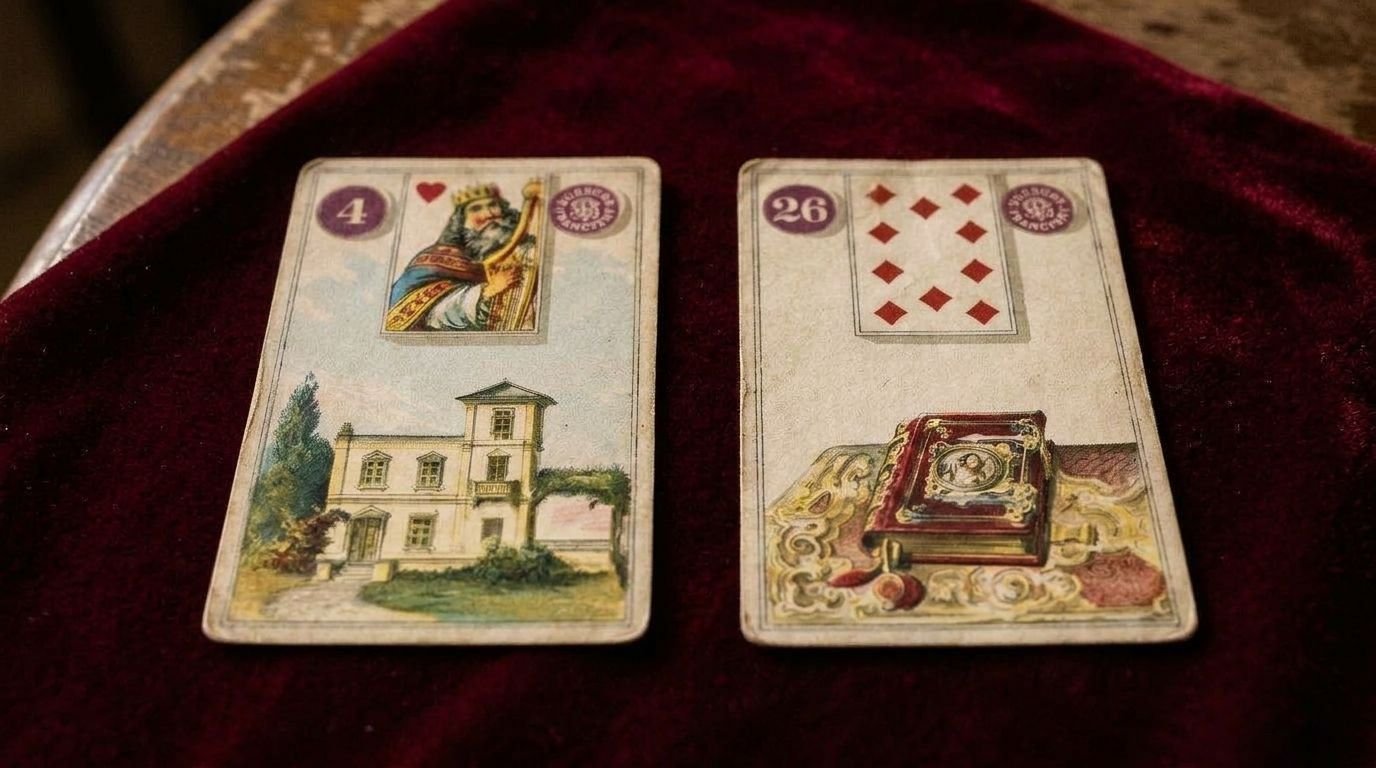
House + Book
The Book's oldest meaning is secrets. It also covers the unknown, education, knowledge and tests. Placed after the House, it tells you what kind of house: a house of learning, a house of secrets. Her students offered a library, a bookshop, a neighborhood school (Mary noted it leans toward a small school rather than a university), a secret stash inside the home, and house hunting for a home you haven't found yet.
House + Fox, and Fox + House
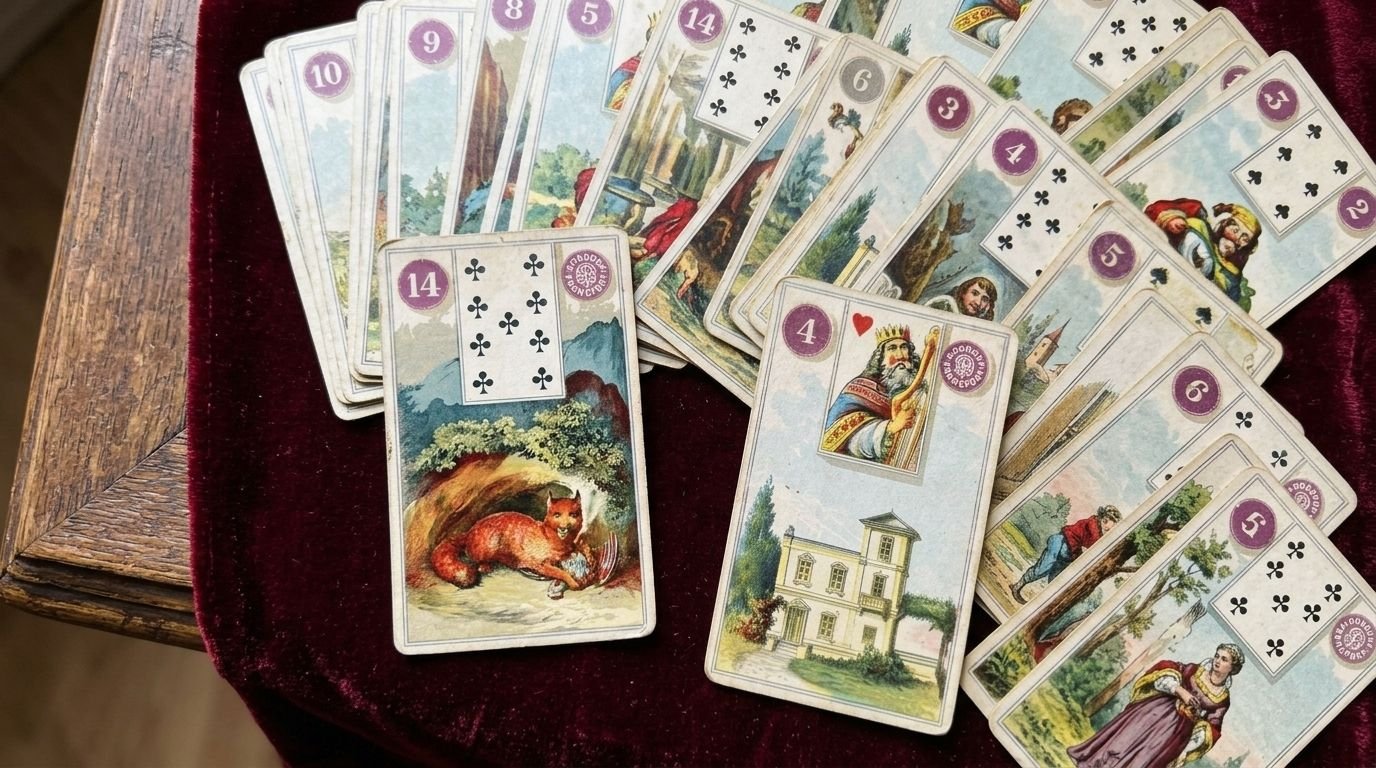
The Fox carries ideas of wrong, false and crafty, and also of work and employees. With the House as subject, the pair can describe a shady property deal, a hidden problem with a house or untrustworthy housemates. Mary adds a wonderfully practical daily-draw reading: if this pair turns up on a day you are due at someone's house, double-check the address. You could arrive at the wrong place.
Swap the order and the Fox becomes the subject: the job or task comes first, and the House describes it. Now you might read a home-based business, or a job made steadier by the security the House brings.
Fish + Ship, and Ship + Fish
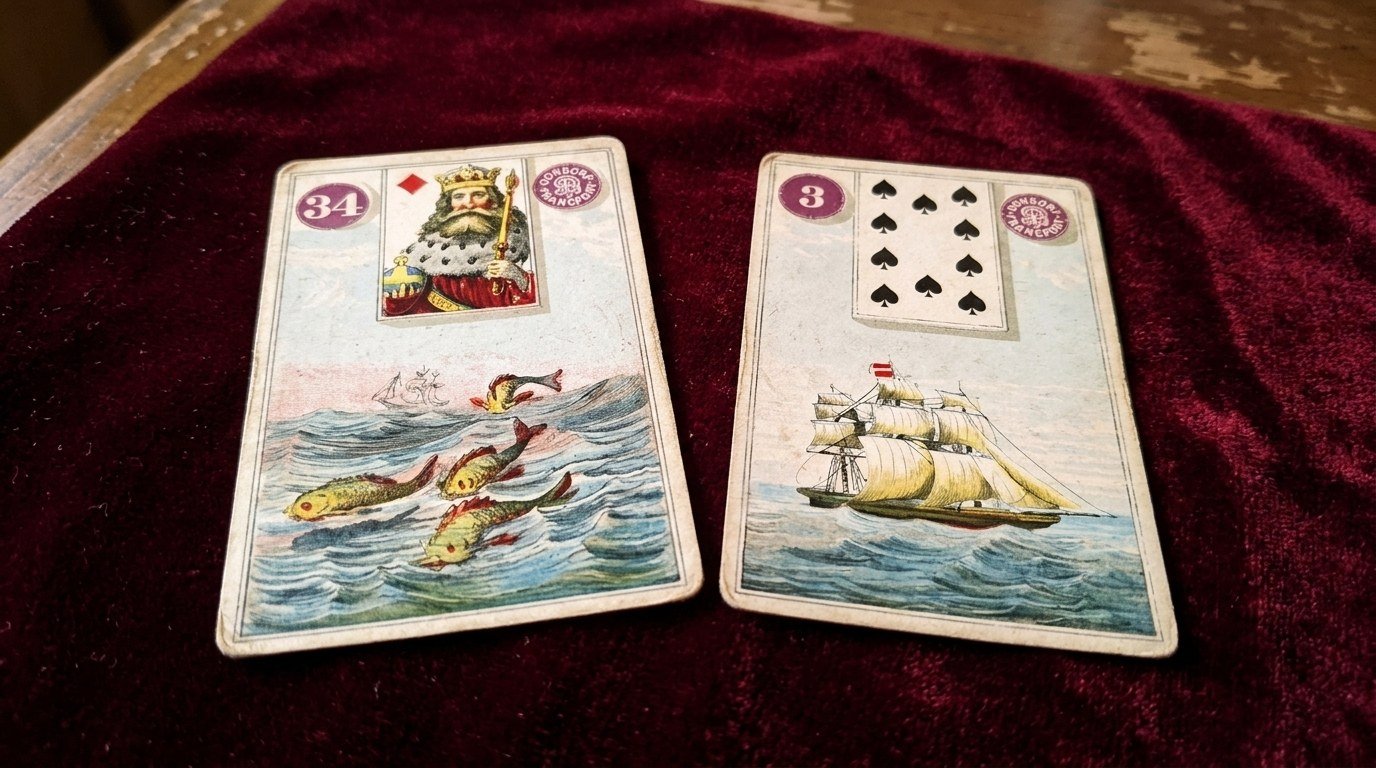
The Fish speaks of money and abundance. The Ship speaks of travel, distance and foreign commerce. Fish + Ship puts money first: money from abroad, a foreign investment, income from import and export. Ship + Fish puts travel first: a lot of travelling, or a trip made possible by money. In Mary's words, “it's not so much the money, it's the travel.”
Same two cards, two different stories. That is why the order you lay the cards down matters. Global Spiritual Studies keeps a finder for all 630 Lenormand card combinations, with a growing set of pair guides that read each pair in both orders.
Leave Your Tarot Meanings at the Door
The biggest adjustment for Tarot readers is that several Lenormand cards share names with Tarot cards, and the meanings do not carry over. Mary is firm about the Moon. She asks students to throw out everything they know about the Tarot Moon and start fresh: in Lenormand its primary meaning is recognition, honors and fame. Its secondary meanings touch on emotions, gentler ones that can be romantic, and on the evening.
She also explains that she doesn't lean on the picture, because the traditional method doesn't. A Tarot reader may study every detail of the artwork; a Lenormand reader works from a small set of keywords. If you would like those keywords in one place while you learn, there is a free printable chart of all 36 Lenormand card meanings that sits nicely beside your deck.
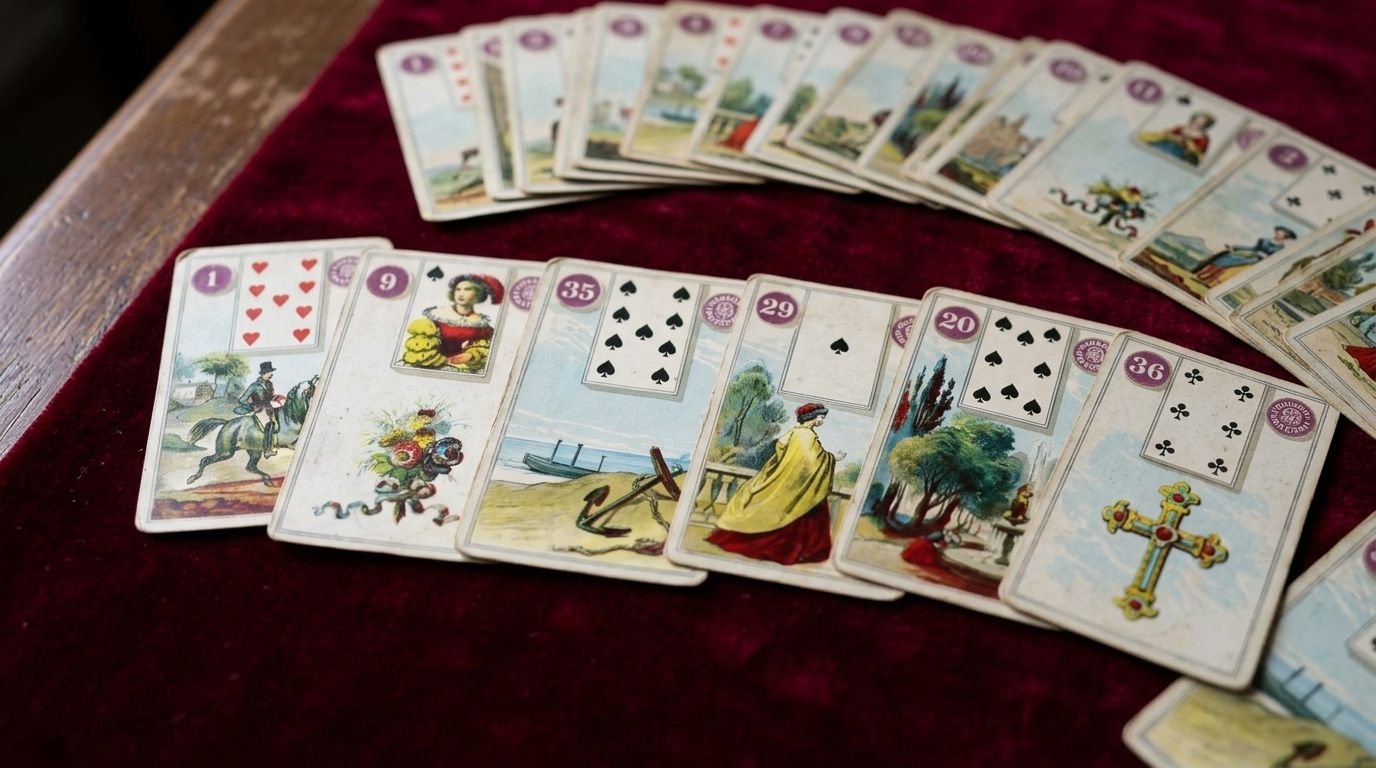
A Two-Card Daily Lenormand Draw
Here is a short practice for today's draw. It takes about five minutes in the morning and two in the evening.
1. Shuffle your Lenormand deck and lay two cards side by side, left to right. No deck yet? Draw on the Lenormand Oracle Reading here at Daily Tarot Draw and read the first two cards as your pair.
2. Give the first card a noun. Write it down: the Ship becomes a journey, the House becomes home.
3. Turn the second card into an adjective. The Fish becomes abundant, the Book becomes secret or learned.
4. Write two or three short phrases from the pair, such as “a secret home” or “a house of learning”. Don't settle on one yet.
5. Let your question or your day narrow it. Mary notes that the question makes a huge difference to which meaning applies.
6. In the evening, look back. Which phrase fit? Note it in a Lenormand journal, which is the first homework Mary sets her students.
For an extra exercise, read your pair in the opposite order too and notice how the story changes. And when two cards start to feel easy, add a third, as Mary recommends for daily spreads.
Where to Go Next
Mary's first homework is to build a small core of keywords for each card: about three nouns and two or three adjectives. For a wider overview of the deck, its history and the main spreads, this guide on how to read Lenormand cards is a good companion to your daily practice.
If you would like to learn the whole system from Mary herself, from the first pair through to the 36-card Grand Tableau, her course The Complete Lenormand with Mary K. Greer is a natural next step. Readers of Daily Tarot Draw can use the code DAILYTAROT10 for 10% off.
Written with Global Spiritual Studies, an online school of Tarot, Lenormand and Kabbalah.