

What is a Reversed Tarot Card?
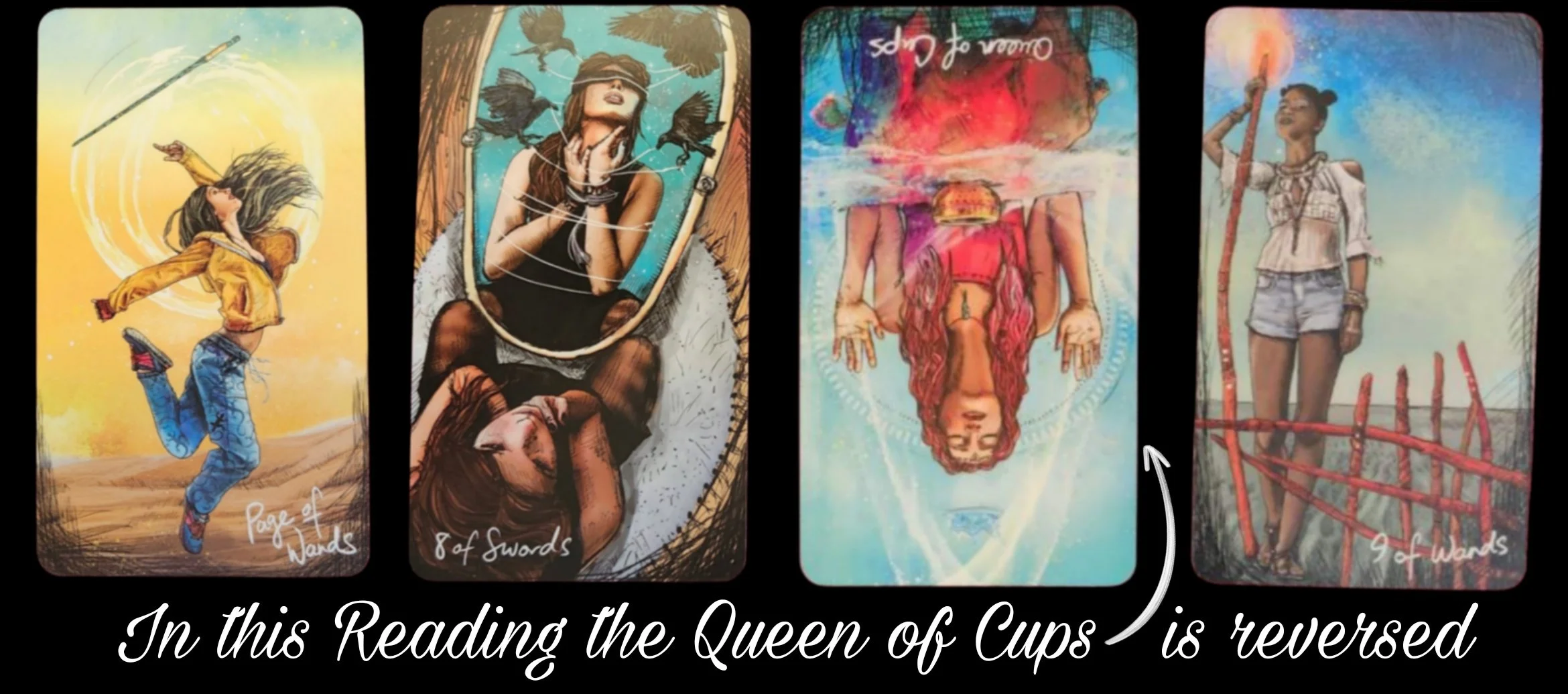
A reversed Tarot card is simply a card that has been drawn in an upside down position.
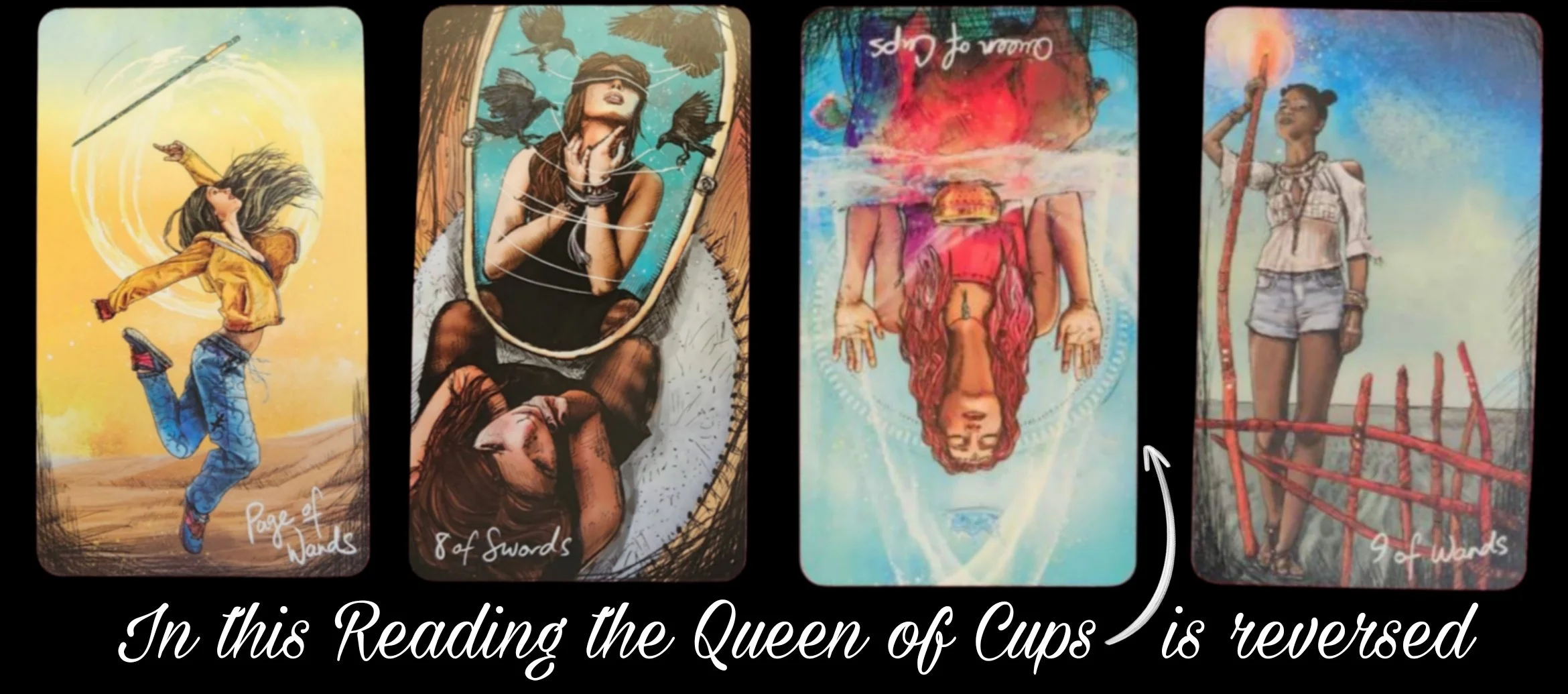
Queen of Cups — Upright vs Reversed
Queen of Cups upright signifies emotional maturity, compassion, intuition. A deeply empathetic, nurturing presence who understands feelings without judgement. Someone who offers steady emotional support and listens with empathy.
Queen of Cups reversed meaning is emotional imbalance, insecurity, or suppressed feelings. Intuition clouded or ignored; moodiness and co-dependency are possible. Someone who is overly sensitive, emotionally withdrawn, clingy, or manipulative.
You may be overwhelmed by feelings or disconnected from them. It could indicate someone who smothers or withdraws instead of engaging healthily. Your intuition blocked by fear, denial, or unresolved trauma. Difficulty identifying or expressing true feelings.
If upright: Lean into compassion and intuitive guidance; offer or receive emotional support.
If reversed: Pause and reassess emotional patterns; practise boundaries and honest self-reflection before making choices.
Reversals add nuance to the meaning of a card. They don’t simply mean to shift the meaning in a negative way, or to use the opposite as meaning. Instead, they deepen a card’s meaning. It may infer blocked energy, an internalized influence, delaying on something that needs to be addressed, an imbalance, or an invitation to look inward at subconscious beliefs.
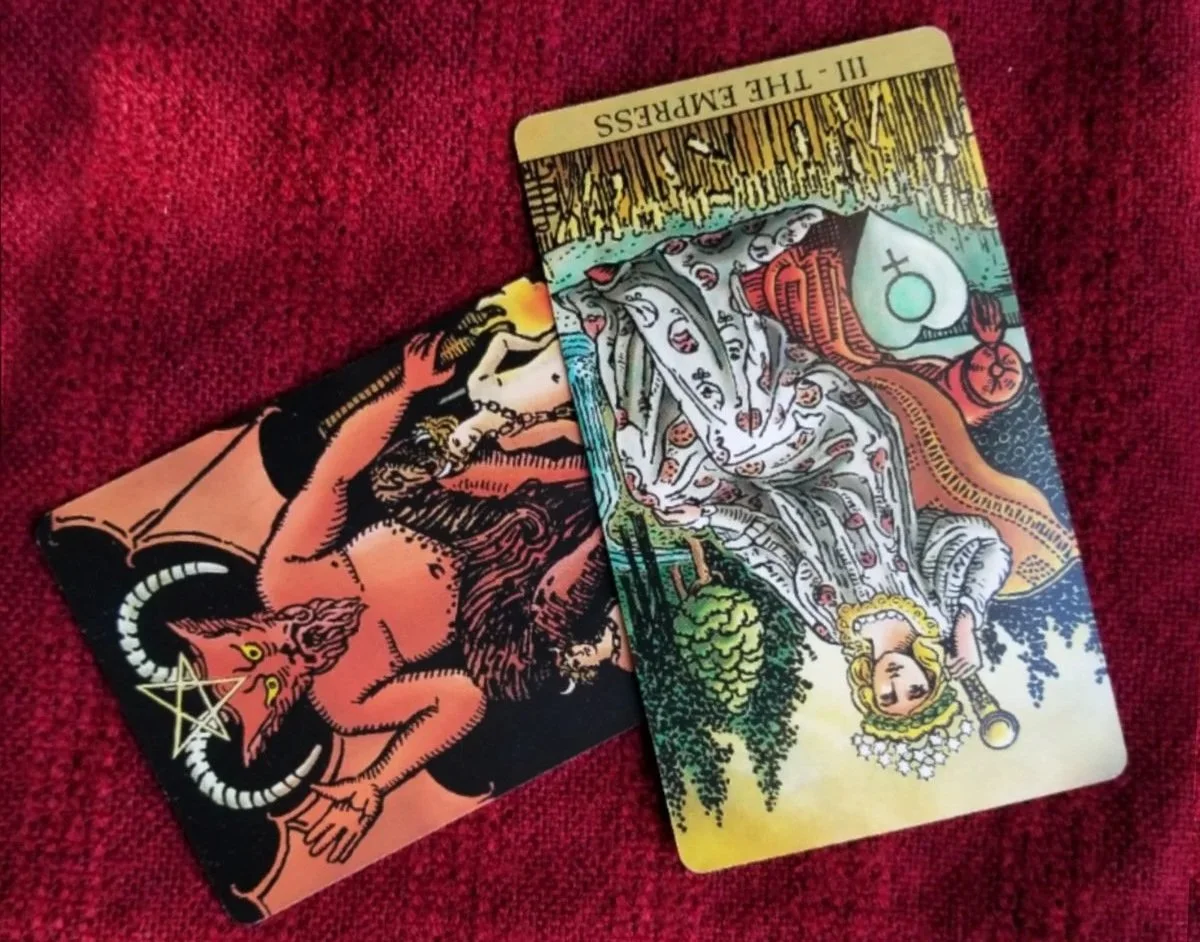
It may be suggesting you need to embody the quality of the card you have drawn, such as embracing an attitude of abundance if you’ve drawn the Empress.
It may be suggesting that you need to release something, such as addiction or an unhealthy attachment with the devil card.
Here are a few ways to think about reversals when they come up in a reading.
Blocked or delayed energy. The card’s usual energy is present but not flowing freely. For example The Chariot reversed might mean stalled progress.
Internalized or psychological expression. The theme is happening inside you rather than outward. The Empress reversed could indicate self-care issues rather than fertility or abundance outwardly.
Imbalance, excess or deficiency. The card’s qualities are present in too much or too little. Strength reversed might point to either weakness or overcompensation.
The card may be seen as a warning or lesson. A reversal can show pitfalls, patterns to break, or a need for adjustment.
Release or recovery. Sometimes a reversed card signals the end of a cycle or letting go. It may be the shadow of the upright meaning resolving.
How to read a reversed card (practical tips)
1. Notice position and spread context.
Is the card in a place that denotes an obstacle, advice, or outcome? The reversal may modify the meaning in some roles or solidify the meaning in others.
2. Ask whether the energy is blocked, internal, imbalanced, or resolving:
Test each possibility against the querent’s situation.
3. Combine with neighboring cards.
Surrounding cards clarify whether blockage is temporary, who or what is causing it, or what’s needed to move forward.
4. Find a way to use the reversal for positive movement rather than as a bad omen.
Say something like “The Sun reversed. Perhaps joy is being suppressed right now, or something is preventing you from fulling enjoying your experience” rather than “This is bad.”

5. Consider timing and action.
A reversed card might suggest delays rather than something more permanent. Ask what steps may unblock the energy.
Common misunderstandings
Reversed ≠ “bad luck” Many readers default to thinking reversals are negative. They’re more accurately shaded or redirected meanings.
Reversals aren’t required. Some readers don’t use reversals at all, they read orientation as part of nuance but rely on upright meanings and intuition.
There is no fail-safe rulebook. Meanings shift with mood, deck symbolism, reader style, and the querent’s life. Treat reversal meanings as flexible guides.
Examples of possible reversed meanings:
The Fool upright: new beginnings, leap of faith. Reversed: hesitation, recklessness, or a need for more preparation.
Three of Pentacles upright: teamwork and craftsmanship. Reversed: poor collaboration, lack of recognition, or skills not being applied.
Ten of Swords upright: painful ending. Reversed: recovery, resisting closure, or slowly healing.
When to use reversals in your reading practice
When you want more nuance and psychological depth.
If you seek to highlight internal blocks or timing issues.
When you’re comfortable trusting instinct and weaving subtle meanings into the narrative.
Quick guide to reversals:
Blocked/delayed — energy not flowing.
Internalized — it’s happening inside, not externally.
Imbalance — too much or too little of the card’s trait.
Lesson/warning — area needing attention.
Release/recovery — resolution in progress.
Final note
Reversed cards are a tool, not a rule. Use them to enrich interpretations, reveal hidden dynamics, and offer compassionate, practical guidance — with a playful wink, not a doom-and-gloom stamp.
If you are interested in taking a deeper dive into reversals in Tarot, here’s a link to 10% off an online course: Reading Tarot Reversals: 12 Keys to Hidden Meaning by Mary K. Greer, author of Tarot for Your Self