


Tarot and Intuition
THE FIRST THREE SECONDS: Taking a Deeper look at your first impression, and what it’s actually saying.
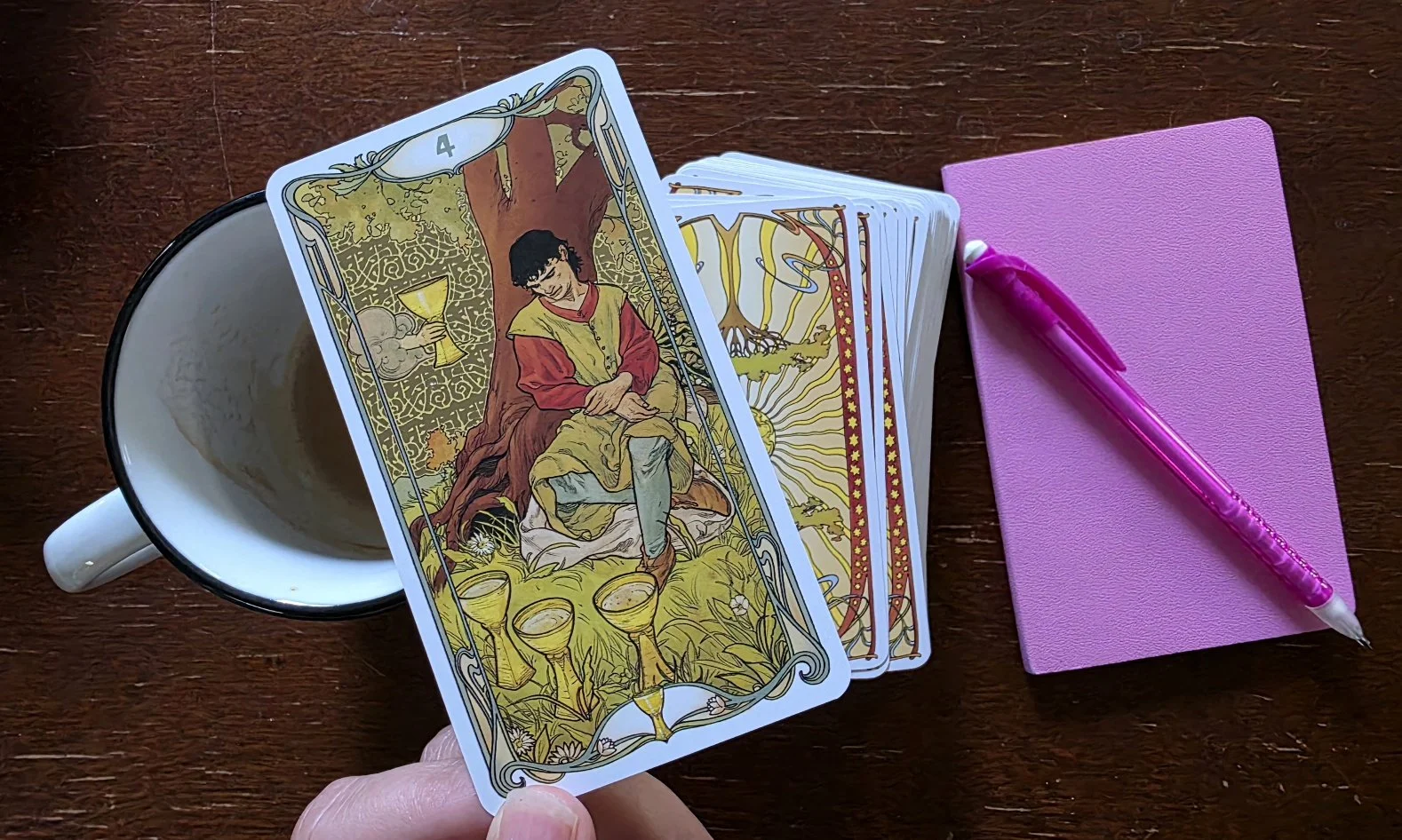
Here is a small experiment. Tomorrow morning, before your coffee has cooled, pull one card. Don't reach for a book. Don't run through keywords. Just turn it over and notice the very first thing that moves in you · a feeling, a word, a memory, a flicker of "oh no" or "good."
Then catch what happens about three seconds later, when your thinking mind steps in and says, "wait, what does this one usually mean?"
That gap between the flash, and the second-guess, is one big reason drawing a daily card is worth doing. You may think the daily draw is a memorization tool, a way to slowly learn 78 card definitions, and it can be that. But the real gift is quieter: it’s a daily rep for your intuition, and almost nobody uses it that way on purpose.
That first flash has a name
The instinctive read you get before you think about what the card means is not magic, and it is not nothing. It’s your brain doing what it does thousands of times a day · recognizing a pattern from everything you have ever seen, felt, and lived, and handing you an answer before you can explain it. Psychologists call this fast, effortless mode "System 1." This is where gut feelings and first impressions come from, and it is astonishingly quick.
Here is the humbling part, though. On its own, that instinct is only about half right. A hundred and fifty years of research on intuition keeps landing in the same place: pure gut feeling, with nothing to check it against, hovers around fifty-fifty. Not because your intuition is broken · because a lot of what feels like insight is actually your own bias, your mood, your assumptions about how this kind of story usually goes.
None of that means the flash is worthless. It means the flash is the beginning of a good reading, not the end of one.
The trap the daily draw quietly exposes
Watch yourself the next time you pull a card you don't like. Say it's the Five of Cups · the figure in the black cloak, the spilled cups. Notice how fast you want to fix it. "But look, two cups are still standing. There's a bridge. Things get better." You leapt straight past the grief to the reassurance.
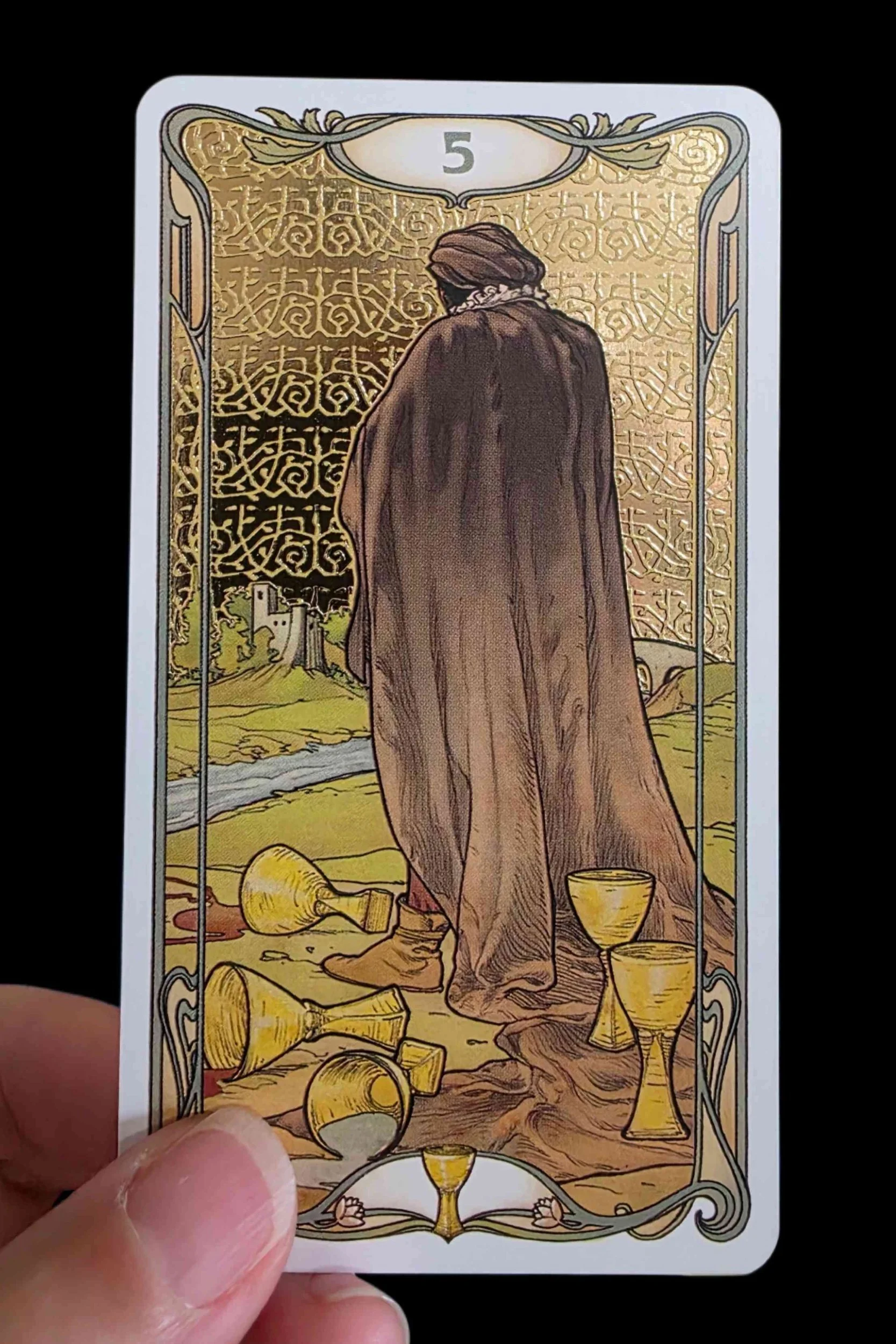
5 of Cups Golden Art Nouveau by Giula Massaglia
That reflex to smooth over the hard card is one of the most useful things a daily draw can show you about your own mind, because you do the same thing when you read for other people. Your daily card is a safe, private mirror. It shows you where you rush, where you flinch, where you tidy a card up before you have actually listened to it.
How to turn your daily draw into real practice
You don't need a new deck or a new ritual. You just need to add a couple of beats to what you already do:
- Catch the flash first, and write it down before you analyze. One line. "This one feels tired." That raw impression is your System 1 talking. Protect it before your keyword brain overwrites it.
- Then, and only then, check it against what you know. The traditional meaning, the number, the suit · treat those as a second opinion, not the boss. Where the flash and the book agree, you have something solid. Where they clash, that clash is the interesting part.
- Turn statements into questions. Instead of "you're heartbroken," try "how are you heartbroken?" A daily card answers a lot more honestly when you ask it something open.
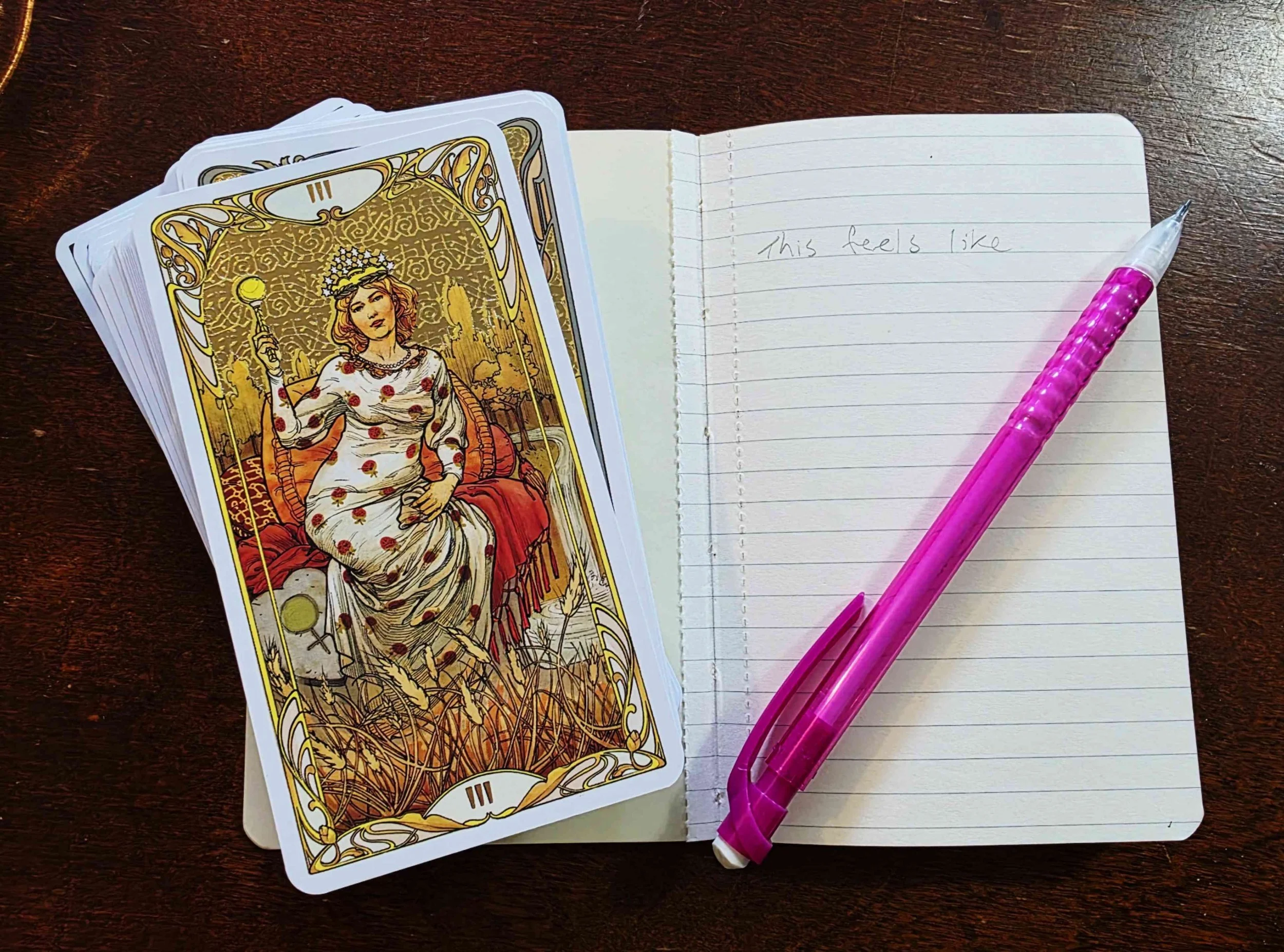
Write down your first impression.
- When you're stuck between two readings, hold three instead. Worst case, best case, and a middle road that helps you actually make the best of the day. Binary yes/no thinking is where intuition goes to die.
- Notice your bias out loud. If a card keeps triggering the same story in you, name it · "I always read the Tower as disaster" · and then set it down and look again. Half of getting more accurate is just getting out of your own way.
Do that for a couple of weeks and something shifts. You stop treating the daily draw as a fortune and start treating it as a conversation with a faster, older part of your own mind · one you're finally learning to trust and to double-check.
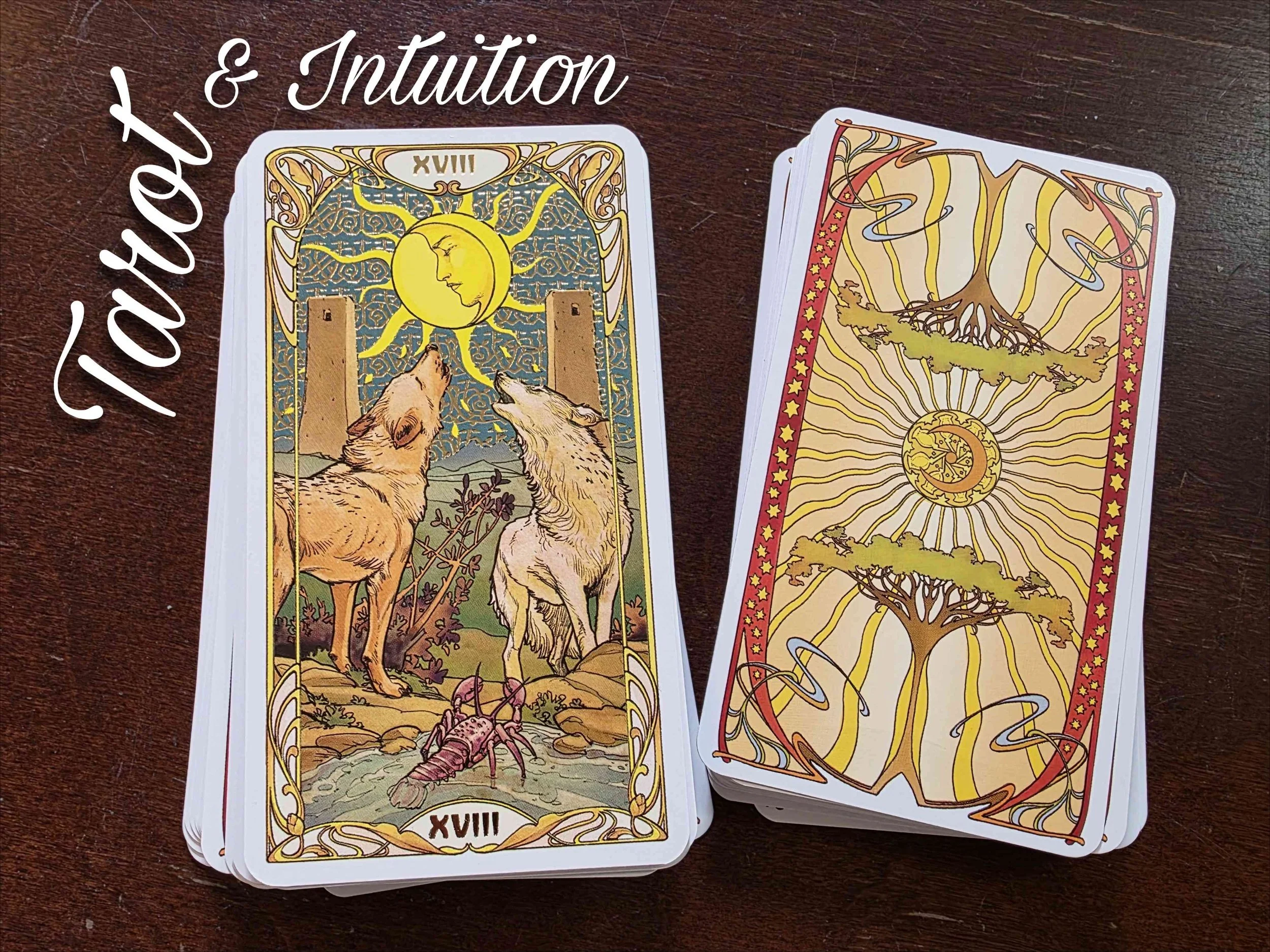
If you want to go deeper on this
Everything above · the fast-and-slow thinking, why intuition sits at fifty percent, the fixing reflex, the three-possibility technique · are ideas I got from Mary K. Greer, who has been reading and teaching Tarot for over fifty years. She has a recorded class called Tarot and Intuition: The Science Behind Your First Impression, it’s a great course if you are interested in taking a deep dive into understanding your own intuition. It explains what that first flash actually is and how to make it more reliable.
It is not a "trust your gut" pep talk. It is close to ninety minutes of Mary walking through the neuroscience of intuition, the bias traps we all fall into, and hands-on exercises you can bring straight to your own readings. If you have ever wondered whether that instant read was insight or just a lucky guess, this is the class that answers it. You can see what's inside and watch the class here:
Tarot and Intuition: The Science Behind Your First Impression
Whatever you do with it · pull a card tomorrow, and this time, listen to the first three seconds.
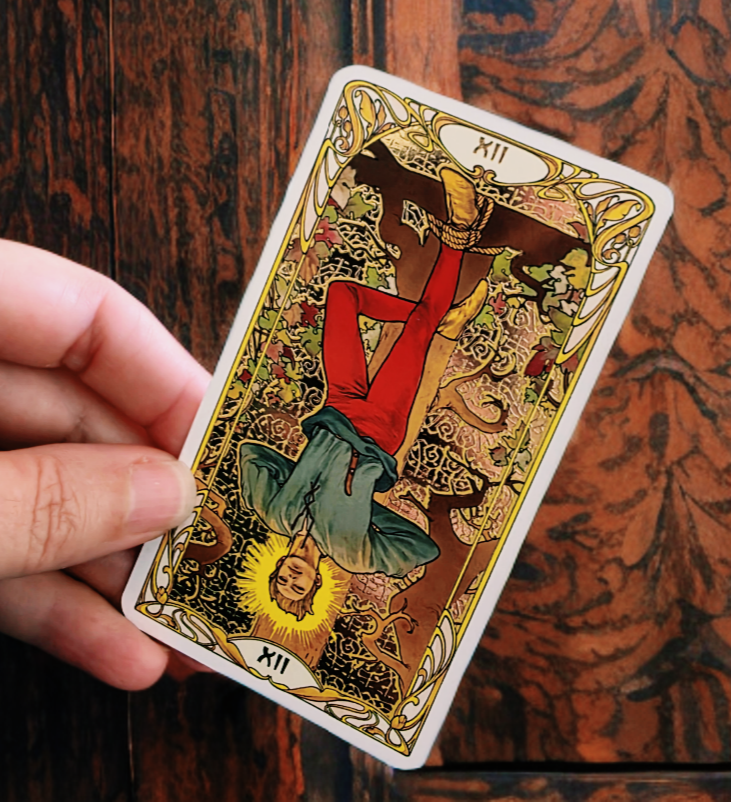
The Hanged Man - Golden Art Nouveau Tarot